Tupananchiskama: Ancient Andean Cosmovision | Cosmovisión Ancestral Andina
Museum of Anthropology at UBC ● March 19, 2026 – January 3, 2027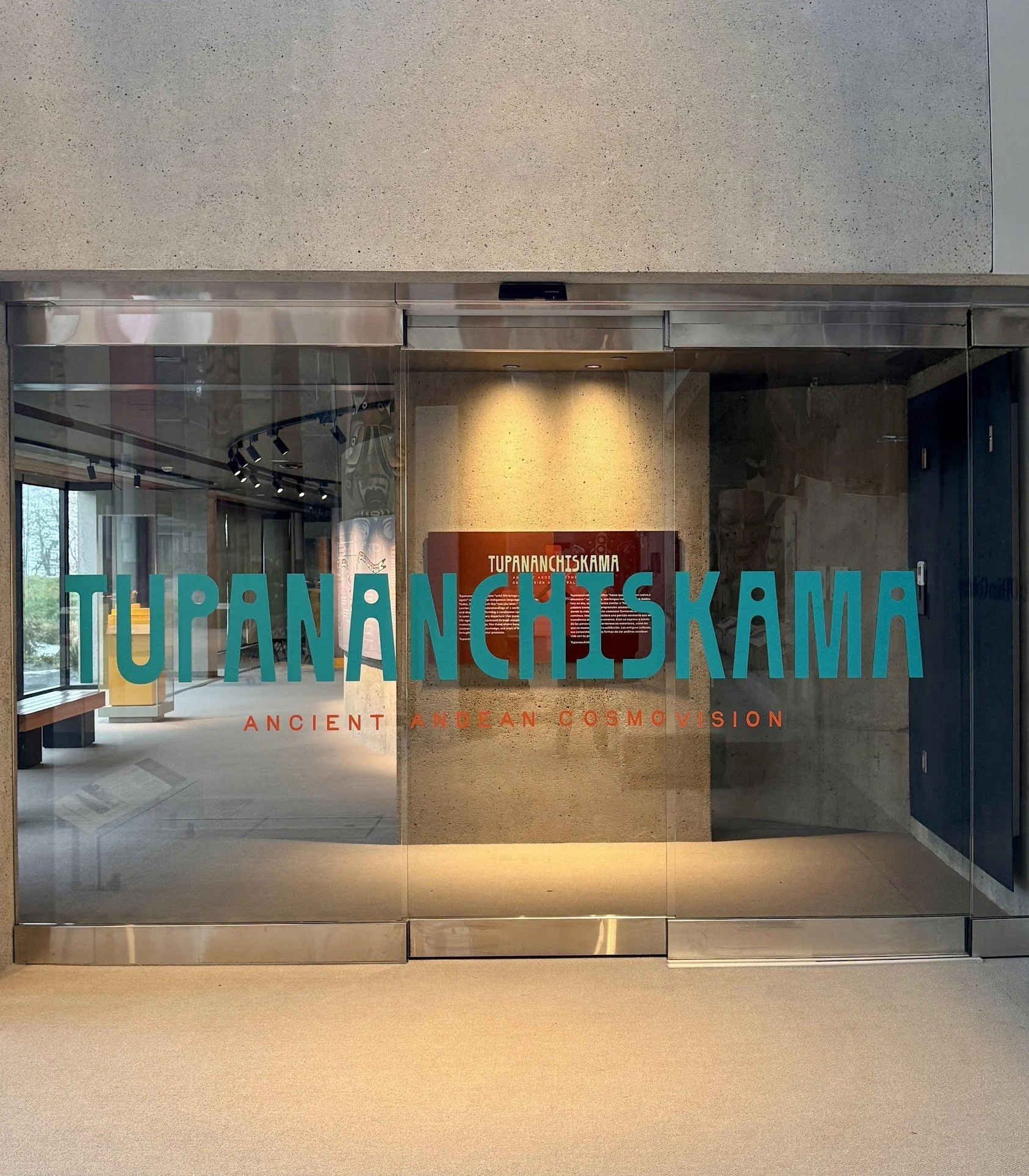
Tupananchiskama means “until life brings us together again” in Quechua. The exhibition at the Museum of Anthropology explored an Andean worldview in which past, present and future coexist, and belongings carry ancestral knowledge and presence.
My design began with three words: active, ancient and spiritual. I wanted visitors to feel the significance of meeting these belongings, the skill of the people who made them, and their continuing connection to living communities. Bold typography, colours drawn from Andean landscapes, and graphics suggesting cycles and interconnected worlds gave these ideas a visible form. The brief was to create an encounter: a sense that these belongings could speak again through our attention.
Scope
Visual identity · typography · bilingual interpretive graphics · timeline · maps · illustration · production
I wanted the graphics to have energy and a sense of announcement. The tall, irregular title lettering gives the entrance a ceremonial presence, with bright turquoise set against rust and deep earth colours.
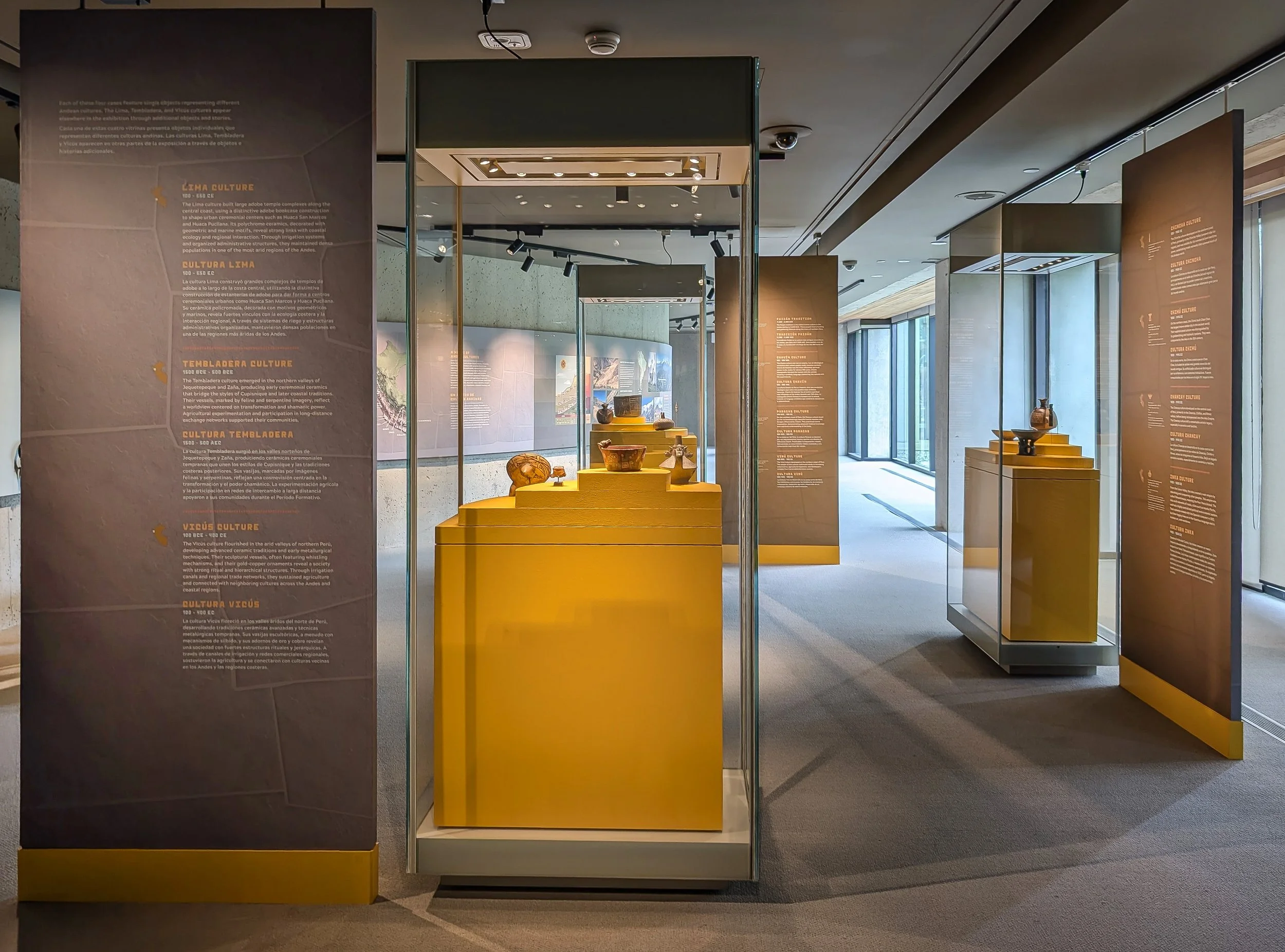
The palette grew from Andean land and sky: stone, dry ground, woven textiles, mountain air and darker celestial blues. These colours carry visitors between geography, wind, cosmology and the night sky. Large headings establish each theme from across the room; smaller text and illustrations reward a closer look. The graphics invite movement, then attention.
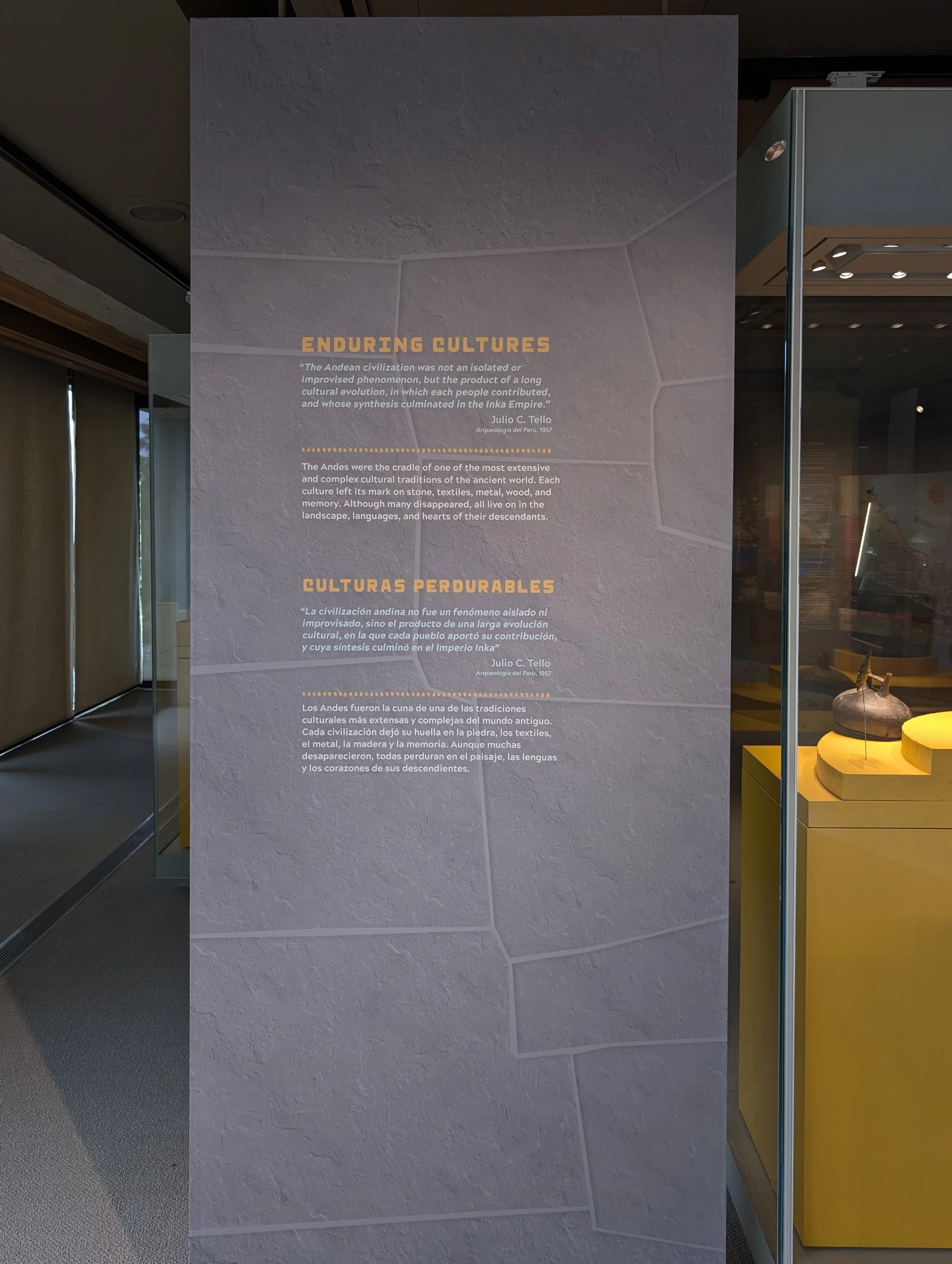
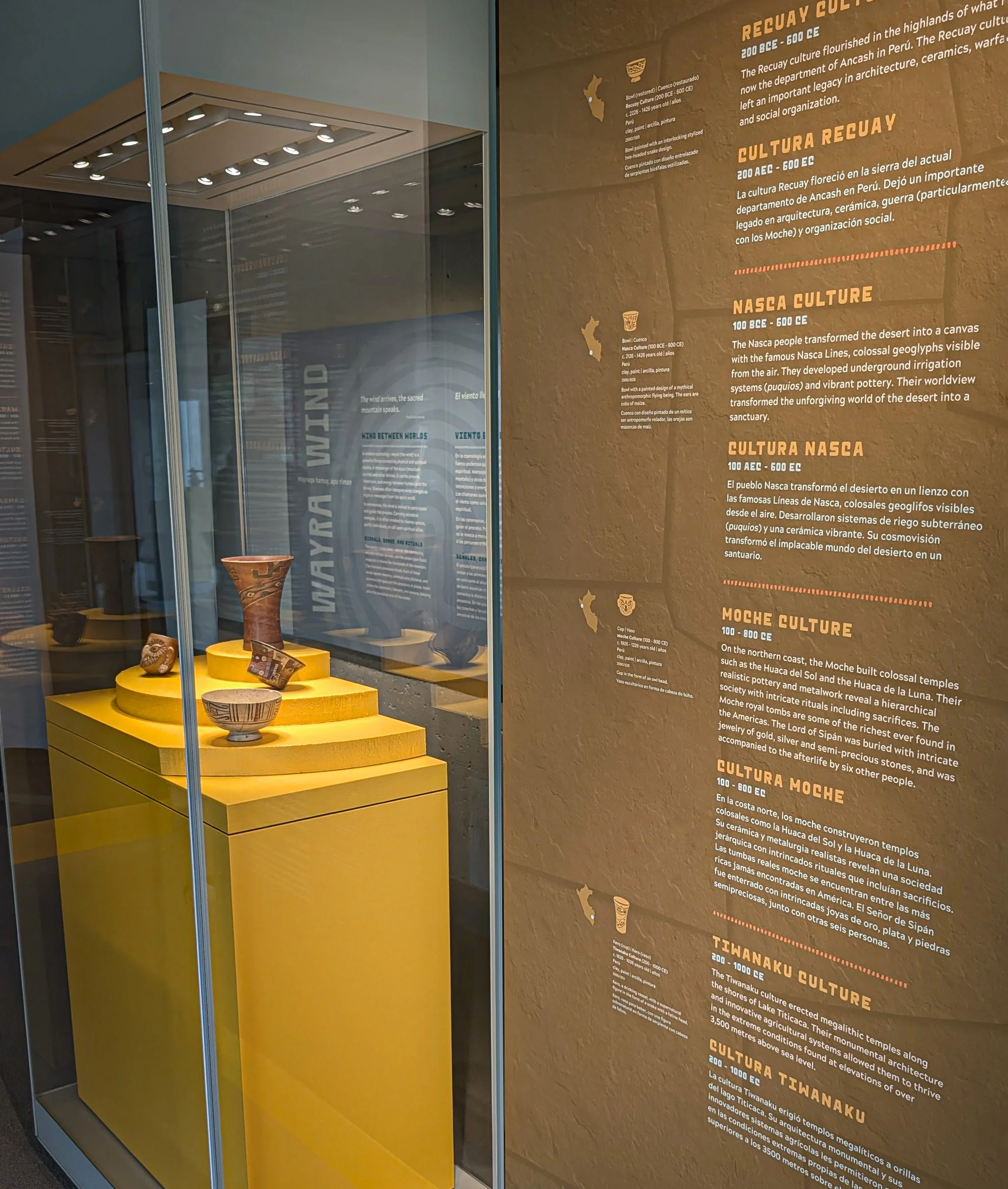
The secondary type brings a different kind of presence. Its bold, solid forms reference the monumental stonework of Inca temples and other ancient Andean buildings. Rounded edges soften that weight, suggesting stone weathered over time. It feels enduring, with the two typefaces bringing together the liveliness of the ceramics and the solidity of the architecture.
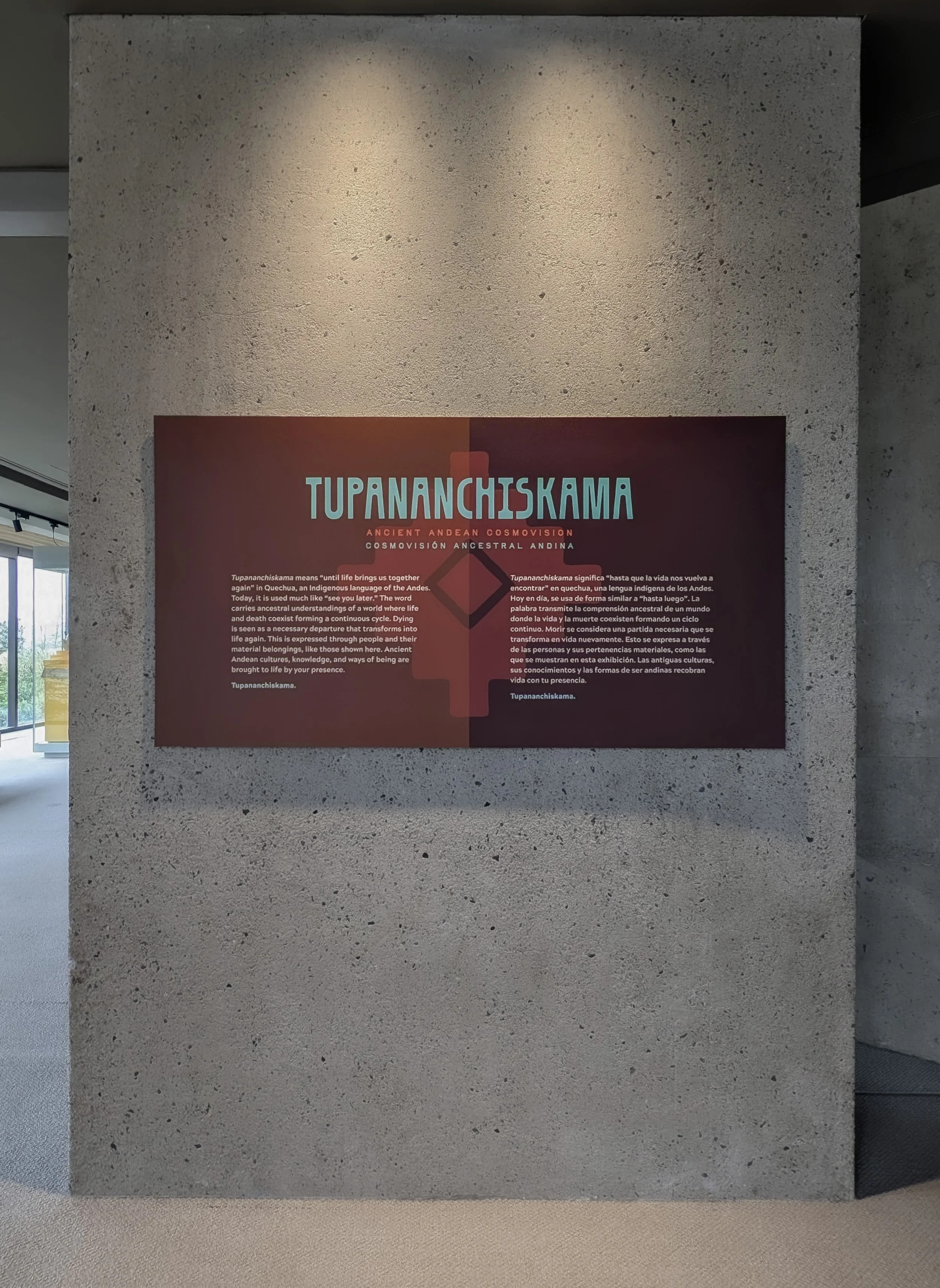
The background also draws from the stone blocks at the base of an Inca temple. Large adjoining fields of rust and brown establish an earthly realm, with bright turquoise lettering giving the title energy and a sense of ceremonial arrival.
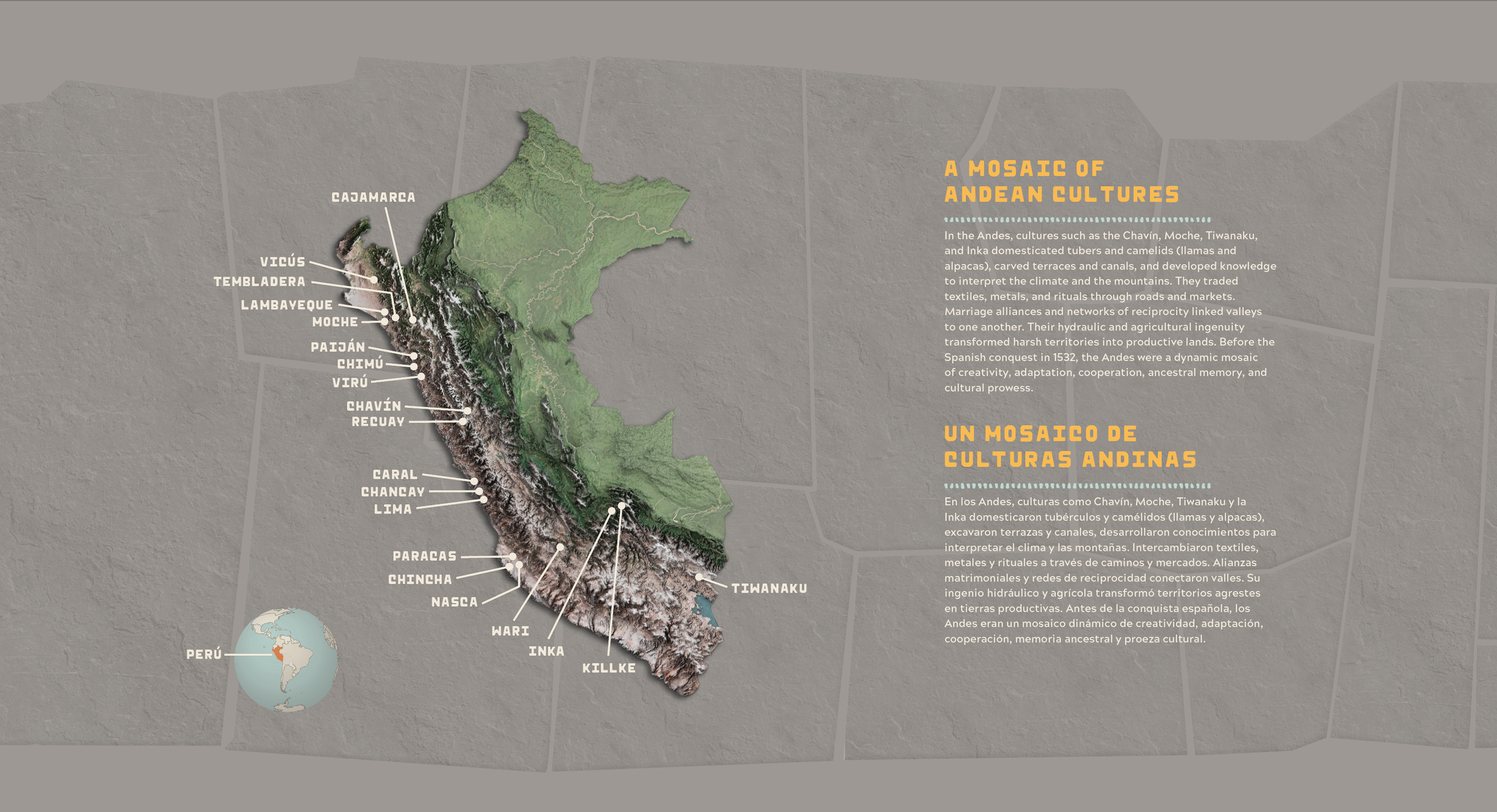
A history that winds around the wall
This timeline traces more than 11,000 years of Andean history through the cultures represented by pottery in the exhibition. Colour distinguishes northern, central and southern Peru, with overlapping lines showing when these peoples lived.
Luis, the curator, requested to use a snake to suggest a history that bends and returns. Across the large curved entrance wall, the timeline reveals itself gradually as visitors follow its length.
Dates shift from hundred-year intervals for the most recent millennium to thousand-year intervals further back, accommodating the Paiján people more than 11,000 years ago. A smaller timeline records plant cultivation and animal domestication, giving the earlier stretches a visible history of people growing food, tending animals and developing knowledge.
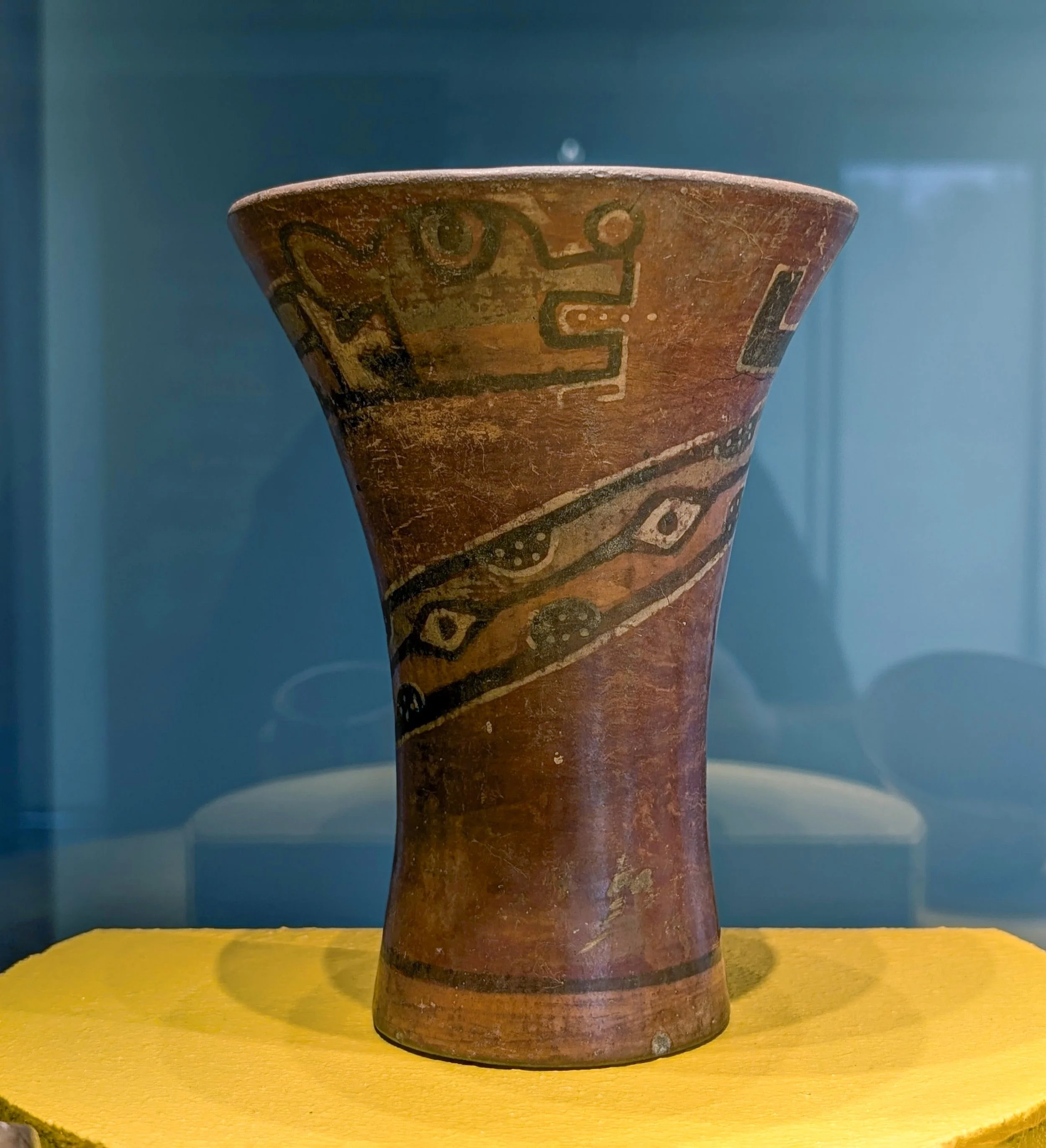
The pattern comes directly from a pot in the exhibition that features a serpent with a feline head and patterned body.
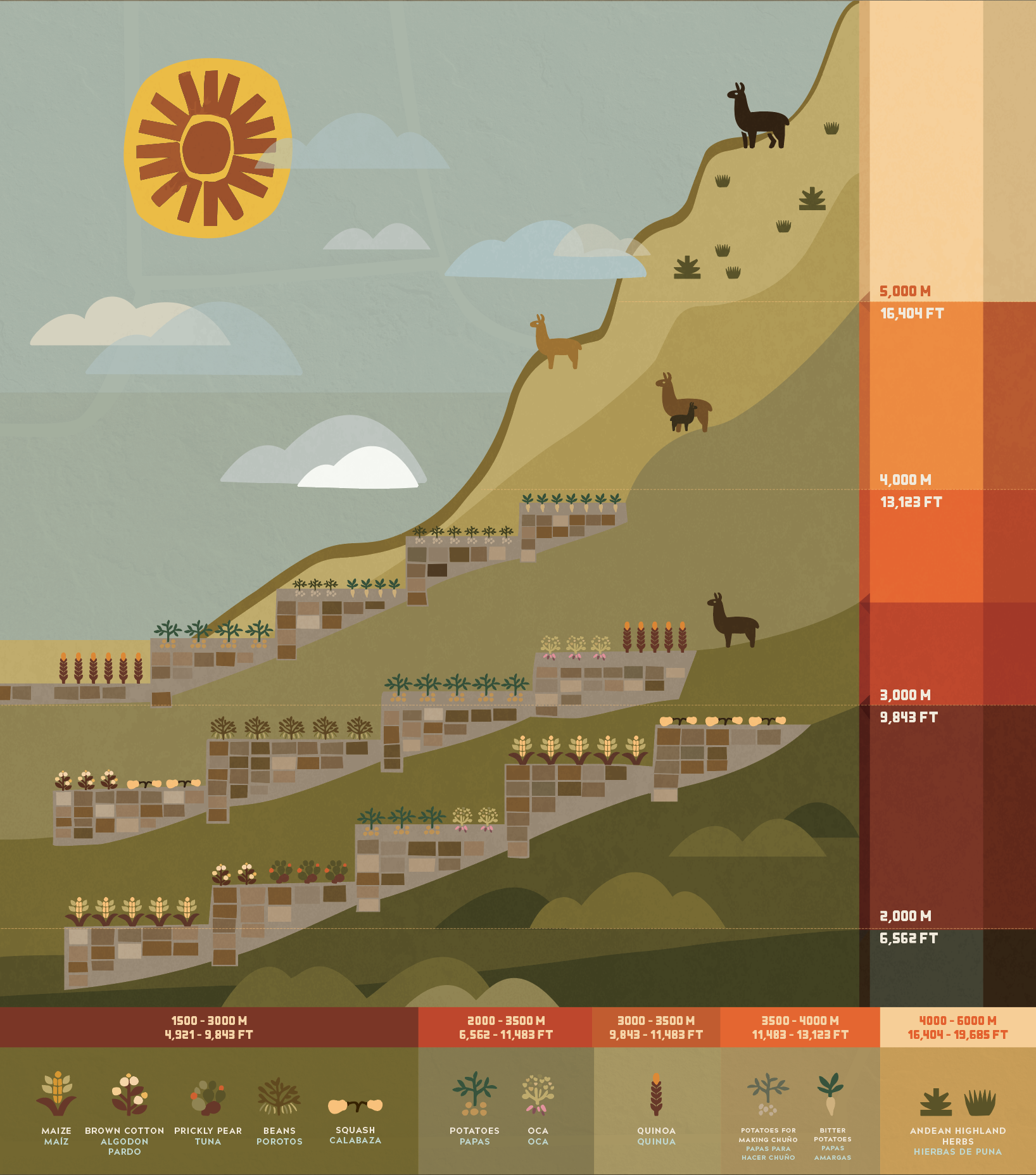
Designing the landscape
This infographic shows how Andean communities used terracing to grow different crops across dramatic changes in elevation. I researched the crops, their growing zones and their physical appearance, then illustrated the entire graphic from scratch — from individual plants and terrace systems to the surrounding landscape. The aim was to make a complex relationship between altitude, agriculture and engineering immediately legible, but still rich enough to reward a closer look.
Connections between worlds
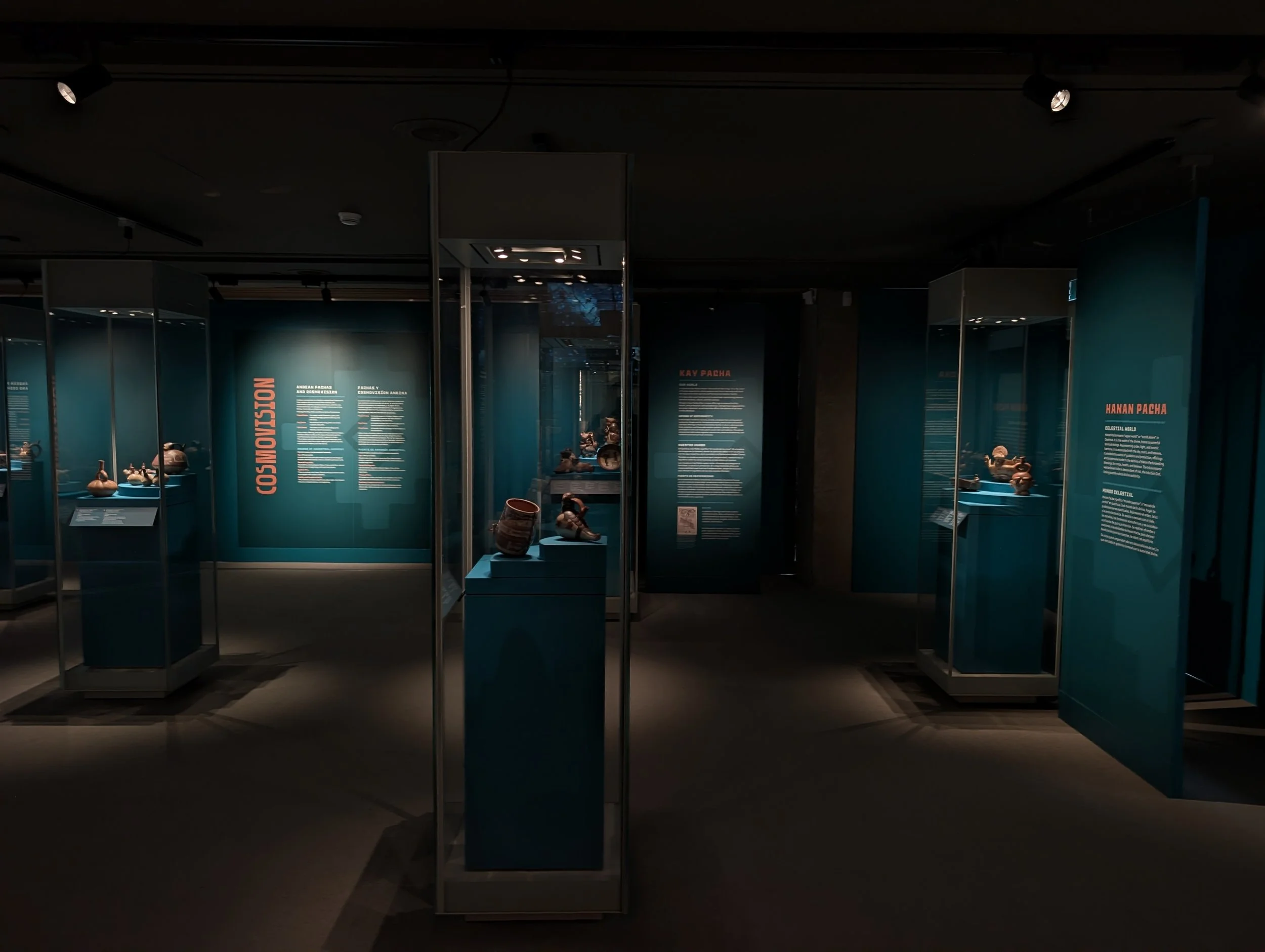
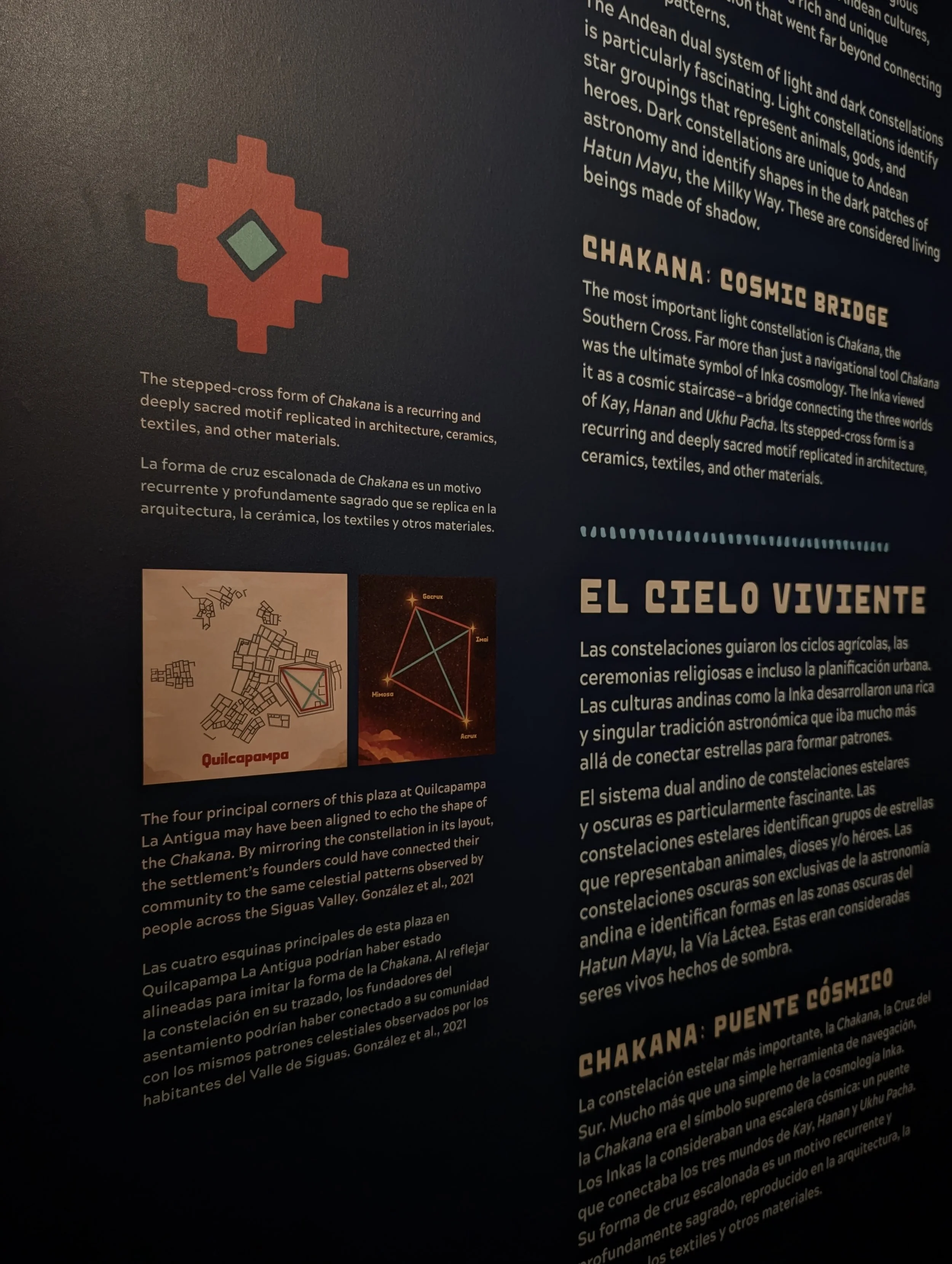
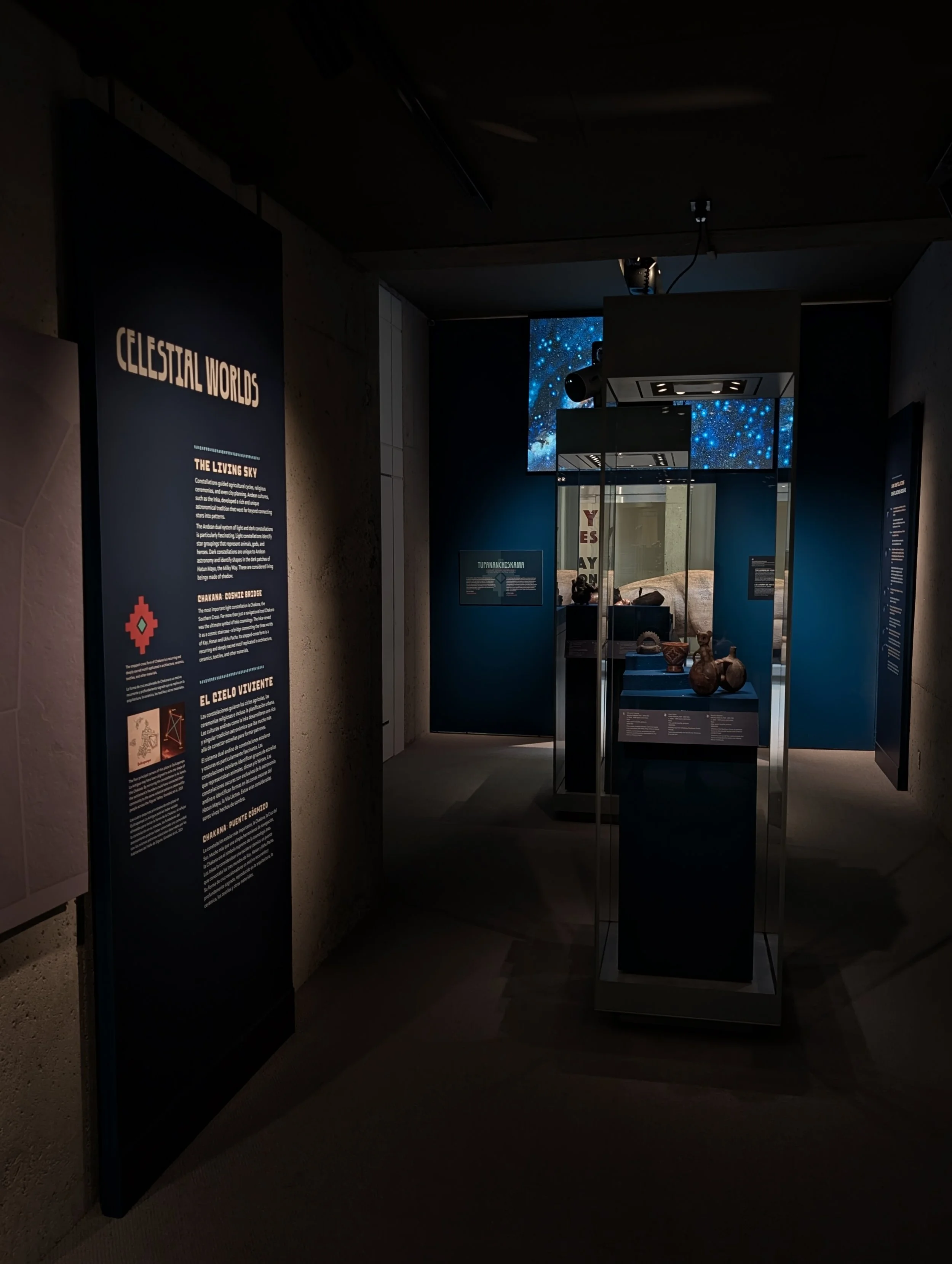
The spiritual quality of the exhibition grew from the relationships between the Andean pachas: the earthly, inner and celestial worlds. I wanted the graphics to give visitors a sense of moving between these connected realms, beginning with the land and everyday life, then following wind, ancestral knowledge and cosmology into the night sky.
The palette follows that movement. Warm earth colours give way to teals and deep blues, creating a quieter, more contemplative atmosphere. Bright orange carries a flicker of energy through these darker colours, linking the sections and keeping a sense of life throughout. Recurring symbolic forms reinforce those connections, suggesting worlds that overlap and influence one another.
Impact
My design gives visual presence to a living Andean worldview, where belongings are ancestors and knowledge carries through generations. It invites visitors to encounter the makers and communities through what they left in our care, and to recognize that their knowledge continues in the lives of people here today.
Tupananchiskama:
Ancient Andean Cosmovision
Guest Curator
Luis Manuel González
Exhibition Design
Joshua Doherty
Graphic Design
Cody Rocko
Curatorial Liaison
Nuno Porto